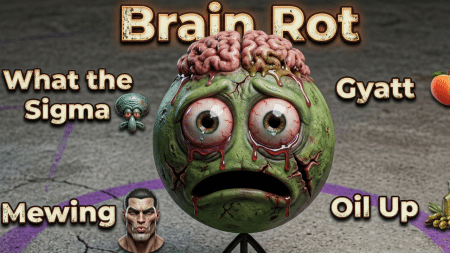



If you ever watch low-quality and repetitive content on social media for a long time that do not add any knowledge or depth, its Brain Rot. Most people do not aware from the term and still searching on the internet the What is Brain Rot and how can we prevent from that? In this guide, I will tell you a secret way to get out of this.
What Is Brain Rot?
Brainrot is a slang term used in internet culture to describe the mental fatigue or decline people feel after consuming too much trivial content on TikTok, Instagram, YouTube and Facebook. This word was first used by Henry David Thoreau in his book Walden in 1854. But after almost two centuries, but this word became extremely popular again in the 2020s, and in 2024 it was even named Word of the Year by Oxford University Press.

If we explore it deeply, It is commonly associated with:
- Endless scrolling on social media
- Short-form videos that require little attention (especially reels)
- Repetitive memes or chaotic humor
- Fast, highly stimulating content designed to keep users watching
When someone says “this video gave me brain rot,” they usually mean the content was silly, absurd, or mentally numbing but still strangely entertaining.
Over time, the phrase evolved beyond jokes. Today, it also refers to the potential cognitive effects of spending too much time consuming shallow digital content.
How Brain Rot Became an Internet Trend
The modern usage of brain rot started appearing online in the late 2000s. Early internet users used it jokingly when talking about reality TV shows, video games, or spending too much time online.
However, the phrase exploded in popularity during the 2020s, especially on platforms like:
- TikTok
- Discord
- YouTube Shorts
- Instagram Reels
Here are the several factors that contributed to this rise:
1. Short-Form Video Explosion
Platforms began prioritizing extremely short videos that deliver quick entertainment in seconds. Among them TikTok was the first who make the reels system popular, then Facebook, YouTube and Instagram also introduce it in their platforms because they always try to deliver what people wants the most.
2. Meme Culture
Online humor started becoming more weird, random, and messy, where jokes often make little sense but are still funny. If you react on a meme, the platform will show you similar video but with different funny caption.
3. Algorithm-Driven Content
Social media platforms use algorithms designed to keep users scrolling longer, which often favors simple and repetitive content. For Example, if you watch a video for long time or you like/comment/share it, the Algorithm will show you similar/related video in chunks.
Because of these trends, the phrase brainrot became a convenient way to describe the overwhelming flow of addictive digital entertainment.
Popular BrainRot Slang Words
Brain rot culture is often connected with internet slang and meme language. Many of these words spread rapidly across gaming communities and social media.
Here are some Brain rot Words of this year:
- Skibidi – A chaotic meme word from viral internet videos
- Rizz – Someone’s charisma or charm
- Gyatt – An exaggerated reaction of surprise
- Sigma – A lone-wolf personality who ignores social norms
- Fanum Tax – Taking someone’s food as a joke.
These words often appear in memes, short clips, and gaming streams, contributing to the chaotic style often associated with brain rot content.
Also Check: Is Gaming a Hobby?
Why Brain Rot Content Is So Addictive
This isn’t random. Psychology and digital media researchers have spent years documenting why short-form content is so hard to stop consuming and the patterns repeat across platforms, demographics, age groups.
There are a few explanations that keep coming up.
Fast Rewards
Anna Lembke, a Stanford psychiatrist, argues in her 2021 book Dopamine Nation that digital activities repeatedly trigger the brain’s dopamine reward system. The mechanism is straightforward: short videos offer instant payoff without any cognitive effort, so the brain logs it as a reward and wants another. The scroll isn’t really a decision at that point.
Emotional Stimulation
Many clips rely on exaggerated reactions, loud sounds, or intense visuals that trigger quick emotional responses.
Familiar Characters and Memes
Recognizable meme characters or internet references make content easy to understand immediately.
Low Mental Effort
Unlike long articles or documentaries, brain rot content requires minimal attention. You just need to look at the screen even when you are tired.
Because of these factors, users can consume dozens or even hundreds of short clips in a single session without realizing how much time has passed.
The Possible Effects
Although brain rot started as a joke, many psychologists and educators are now studying its potential effects. Excessive consumption of low-effort digital content may contribute to:
Reduced Attention Span
Constantly switching between short videos can make it harder to focus on longer tasks.
Cognitive Overload
Too much fast-paced information can overwhelm the brain.
Emotional Desensitization
Repeated exposure to exaggerated content may reduce emotional sensitivity.
Mental Fatigue
Spending hours scrolling can leave people feeling mentally drained.
It is important to note that brain rot is not a recognized medical disorder. However, experts often connect it with problematic social media use and digital overconsumption.
Why It Became So Popular With Younger Generations
Generation Z and Generation Alpha played a major role in popularizing this term. Younger internet users often use the phrase humorously to describe:
- Chaotic meme content
- Overuse of internet slang
- Endless scrolling on social media
In many cases, the term is used self-awarely. People recognize they are consuming silly content, but still enjoy it.
Interestingly, some researchers believe the trend also reflects resistance to constant productivity culture. Instead of always trying to be productive, young users sometimes embrace nonsense content as a form of digital relaxation.
How to Avoid Brainrot
Avoiding brain rot does not mean quitting the internet completely. Instead, it means building healthier digital habits. Either you need to reset personalize feed and start from scratch while comsuming informative content like What happen in the world in the past 24 hours?
Here are a few practical strategies.
Limit Screen Time
Set daily limits for social media. It will help you to reduce excessive scrolling and you can do nothing when you ran out of set timer.
Turn Off Notifications
This is the thing, I also use in my phone. Just long press on the apps that makes you lazy, and turn-off nitifications. Now you will only comsume internet when you want, no notification means no distraction.
Choose Long-Form Content
Watch science facts, history animations, documentaries, Podcasts and read books. It will not only helps you to avoid but also reclaim you.
Take Regular Breaks
Go outside, meet your friends, play puzzles, solve difficult questions, quizzes or got involved in physical games such as cricket and football. It will help your brain recover from information overload.
Final Thoughts
Brain rot isn’t just a joke, it shows how digital media has changed the way we consume content. From chaotic memes to endless short videos, platforms push fast, repetitive entertainment that can drain our attention. While the term is playful, the issue behind it is serious. By understanding brain rot, we can become more aware of our habits and make smarter choices online, taking control of our time instead of letting algorithms dictate it.